
Classroom Article
Back to ClassroomMacroscopic Wood Identification
Small worlds with big clues.

Agritix
25 Feb 2021
4 mins read
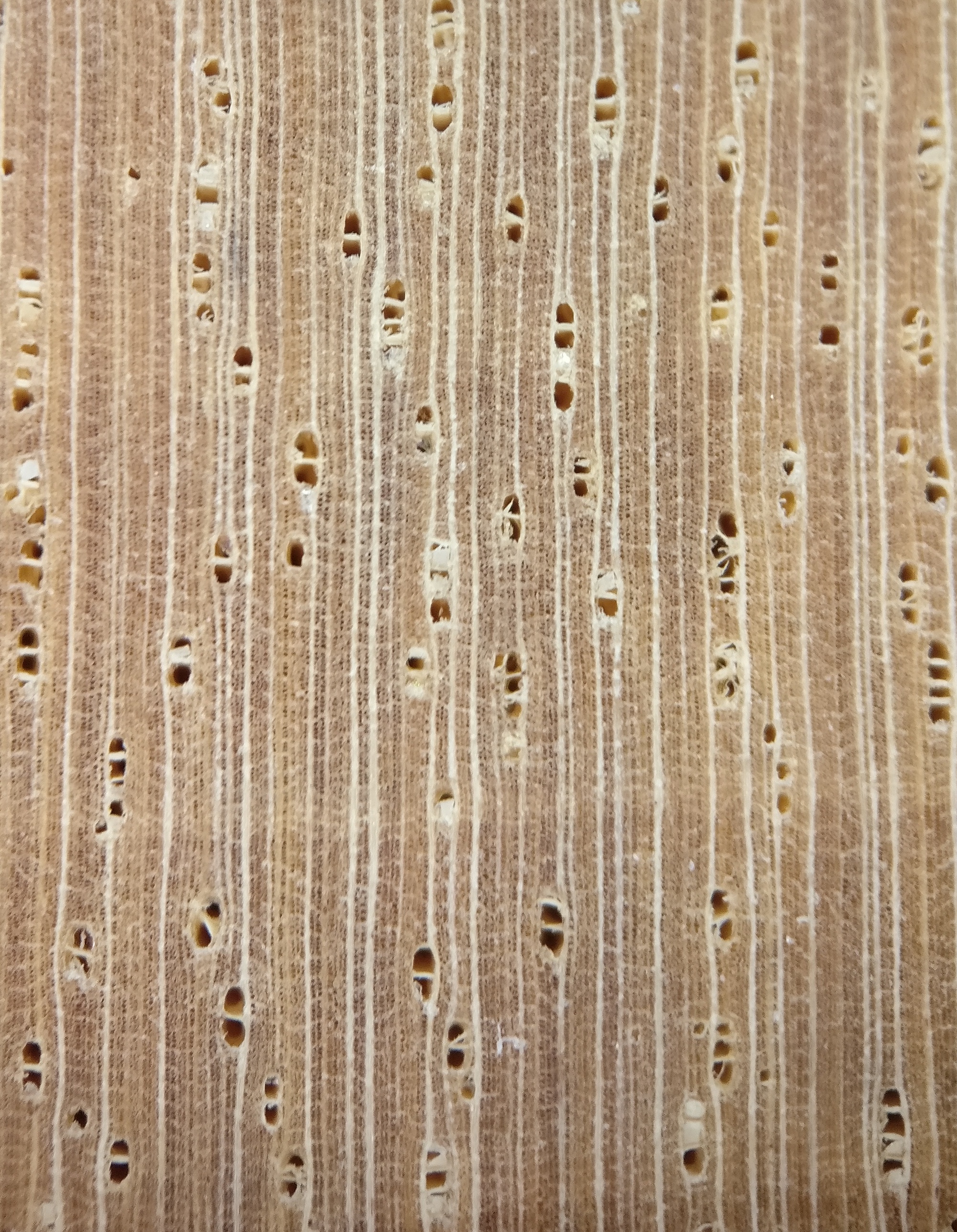
Macroscopic end-grain surface of Dyera costulata.
Introduction
The macroscopic features of the transverse section (cross section) of a piece of wood are usually sufficient to give clues to the identity of the hardwood timbers. However, before embarking on the identification of an unknown piece of wood, several steps are necessary to ensure that the observation of the macroscopic features is done correctly and accurately.
Preparation of the sample
(i) On site or quick examination
For the wood sample that needs to be examined on site, the use of a very sharp pen knife is usually good enough. To ensure a smooth cut, cutting should be carried out in a single motion and along the ray. For most hardwoods, the structures that appeared on the small cut are good enough for the identification of the wood. Additional information on the physical features such as weight, colour, specific features (only found in some species) like ripple marks, latex traces or included phloem are useful as well.
Making a small cut on the wood surface using a razor knife to reveal the macroscopic features for examination.
--
Xylorix
(ii) Laboratory condition
In the lab, the cross section of the wood may be cut using a microtome knife. Sample prepared using a microtome knife usually gives a very clear structure of the wood. However, this method of preparing the wood cross section is impractical for quick identification work or on site.
Difficult and hard to cut wood
Commercial timbers consist of very soft and light timber like balsa (Ochroma pyramidale) to very hard and heavy timber like belian (Eusideroxylon zwageri). As such, the cutting of wood cross section can range from very easy to very difficult. As a general rule, wood that is easily indented by finger-nail is considered soft; the one that is not readily indented by nail is considered fairly hard and finally, wood that is barely indented by nail is considered hard to very hard.
Woods which are soft or fairly hard are easy to cut across and usually a larger area of view can be obtained. However, when the wood is hard to very hard, cutting of the cross section becomes a problem and thus, several issues which may arise including: (i) a smaller viewing area is obtained, (ii) scratch lines on the viewing area, and (iii) uneven viewing surface. To avoid faulty assessment caused by the above-mentioned issue, some of the best ways to overcome the problems are: (i) use of a very sharp “NT cutter blade” and (ii) aiming for a smaller area of cut.
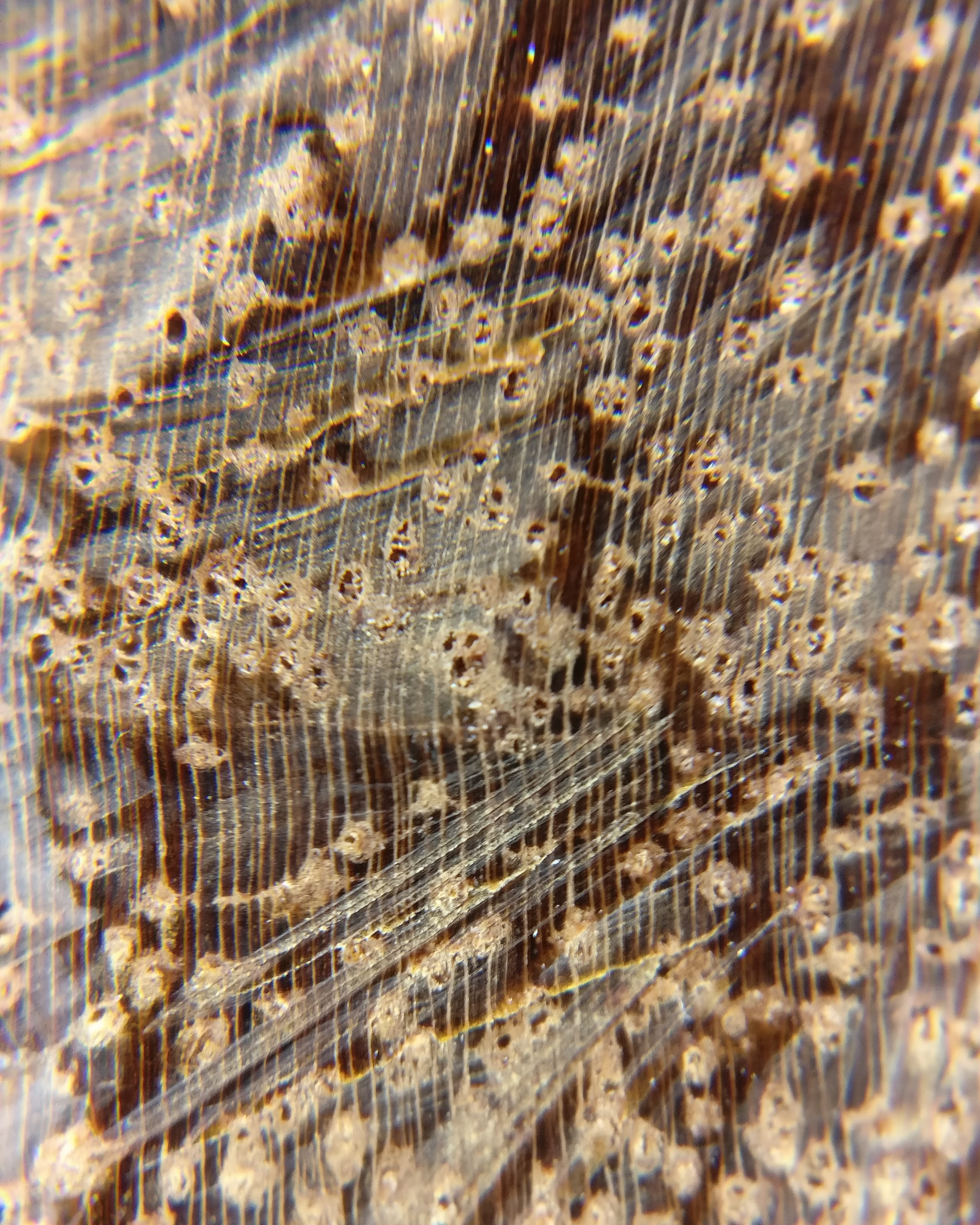
End-grain macroscopic surface of a belian wood, a much harder wood to cut shown here with unevenly refreshed surface and visible scratch lines due to stuttered cutting motion.
--
Xylorix
In the laboratory however, there are several ways to soften the wood such as repeatedly boiling them in water until they sink and the cut should preferably be done immediately. Other methods include soaking the wood in acid for a period of time, but it is not a preferred method due to the corrosiveness of the acid and it is dangerous to handle.
Viewing Magnification
For general observation, a magnifier with ten times (x10) magnification is sufficient in most cases. However, for woods with smaller pore sizes, slightly higher magnifications such as x15 or x20 may be used. But in general, the choice of magnification depends very much on the user’s requirement.
For the purpose of publication or comparison between one species to another, it is important to use the same magnification so that the users understand the description better especially regarding the sizes of pore, rays or parenchyma cells. For example, as shown in the image below, merbau (Intsia palembanica) has large pores whereas ramin (Gonustylus spp.) has small pores.
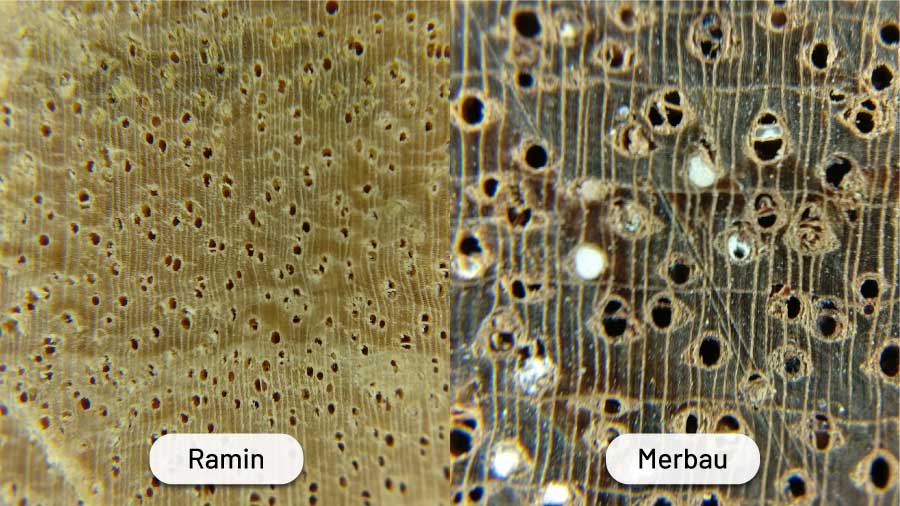
Macroscopic end-grain surface of both ramin (left) and merbau (right) shown in the same 24x magnification captured using the Xylorix WIDK-24X01 lens kit.
--
Xylorix
Anatomical features of similar species growing in different localities
The main features of a timber species hardly vary if they were grown in different localities. For example, the structure of teak (Tectona grandis) grown in Myammar is similar to those planted in Indonesia, Malaysia and Africa. As such, it is difficult to ascertain for sure that a particular timber is from a certain locality. However, there is a possibility of slight variation in their structure and some physical features due to weather, age and conditions of growth. For example, (i) teak from Myammar is usually darker in colour and heavier than those planted elsewhere mainly because they are grown in the natural forest and possibly much older than those harvested from the planted sources, (ii) and the ring width may be wider when the growing conditions are favourable.
For woods harvested from the same log, the anatomical feature is the same irrespective of where the sample is extracted except that the wood from the heartwood may contain features like tyloses (a kind of membrane-like feature), deposits of different colours (if any), and the pore sizes may be smaller if it is extracted from near the pith (the oldest and very centre part of the tree).
-- Prepared By Xylorix Wood Experts Panel
Have any question or comment? Send us a message here
Thanks for reading the article! If you like it or wanting to see more of these articles, be sure to check out our Facebook and LinkedIn page where we keep our users updated when there's new article enter the series. 🥰