
Classroom Article
Back to ClassroomTimber Trading (II)

Agritix
2 July 2021
2 mins read
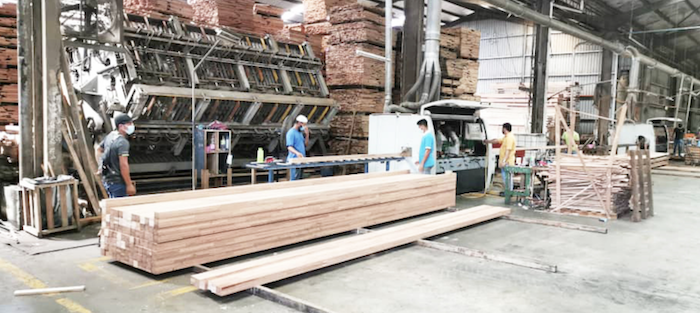
Timber trade in Malaysia
Exportation of timber and timber-based products has always been one of the notable income sources for Malaysia. At first, timber trade was confined only to export of logs and sawn timber with minimum processing. As time went on, the local timber trade evolved from mainly supplying raw materials to producing finished products like furniture, flooring boards, laminated boards, doors, window frames, and many more. Large number of timbers were also used for railway sleepers for the Keretapi Tanah Melayu (KTM) or Malayan Railway. From the 1990s onwards, Malaysia also saw a large-scale usage of rubberwood (Hevea brasiliensis) for making furniture, laminated components and as the main material for the production of medium density fibreboard (MDF).
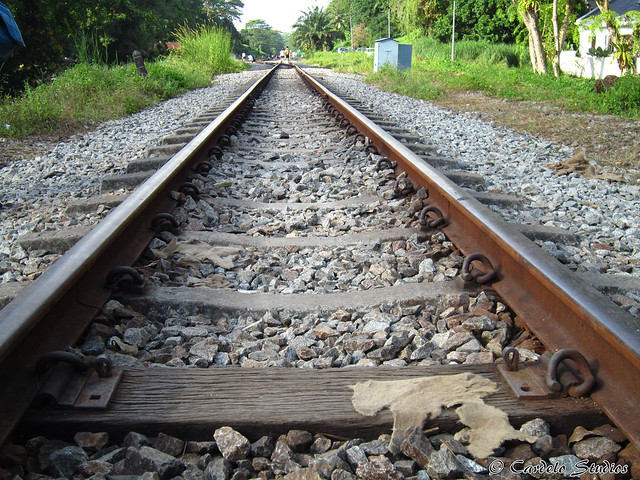
Wooden railway sleeper laid under the Malayan Railway’s track.
--
lostnfilesgIn the early days, as forest logs were in abundance, the recovery rate from sawing and processing was around 50% or less, resulting in a lot of material wastages. But as logs are getting more expensive, wood processing industries are being more diligent with material managing to improve recovery rate, and in some factories, the recovery rate is over 90% where almost all forms of wood including sawdust will be converted for some uses. With the diminishing supply of logs from Malaysian natural forest, many timber processing factories have been importing sawn timber from other countries as well for further processing for both local and overseas markets.
Commercial timbers in Malaysia
Commercial timbers can be divided into two main categories i.e. hardwood and softwood. There are about 3000 species of tree making up of about 100 timber groups that reach timber size suitable for commercial exploitation. Most Malaysian commercial timbers are hardwood timbers consisting of better known timber groups as well as the lesser known timbers. There is only one softwood of commercial importance, i.e. damar minyak (Agathis borneensis). Other softwoods of lesser importance are podo (Podocarpus spp.) and sempilor (Dacrydium spp.) primarily due to their limited supply from the natural forest.
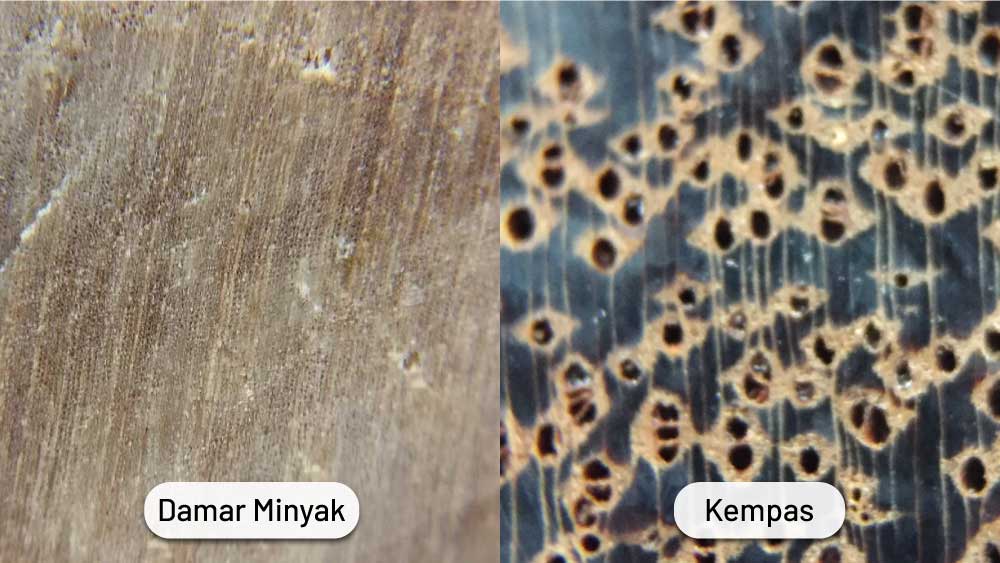
24x magnified macroscopic end-grain surface of damar minyak (left), commercial softwood and kempas (right), one of the popular commercial Malaysian hardwood.
--
Xylorix
Commercial timbers are typically sold by their groups and not by species as it is very difficult to identify a timber down to its species in log or sawn timber forms. For example, Keruing timber comes from a group of 30 species of the genus Dipterocarpus; Kedondong timber comes from around 200 species of the family Burseraceae. But on the opposite end, there are also timbers with single species such as chengal (Neobalanocarpus heimii), punah (Tetramerista glabra) and perah (Elateriospermum tapos).
-- Prepared By Xylorix Wood Experts Panel
Have any question or comment? Send us a message here
Thanks for reading the article! If you like it or wanting to see more of these articles, be sure to check out our Facebook and LinkedIn page where we keep our users updated when there's new article enter the series. 🥰