
Classroom Article
Back to ClassroomWood Identification Techniques
The ways of telling what a wood is.

Agritix
8 Feb 2021
4 mins read

Yes, it's wood. - Identifying Wood. A popular book by R. Bruce Hoadley
Methods of Wood Identification
In general, there are three distinct methods of identifying timber, namely (i) macroscopic (ii) microscopic and (iii) DNA. There may be other methods such as the use of infrared technology but its application is rather limited and mostly in the experimental stages and species specific.
After the unknown wood is examined with the naked eye and hand lens, several methods can be used to identify the wood. One of the earliest methods was the development of “Dichotomous wood anatomical keys”, card sorting keys using marginally edge-punched cards, computer-assisted programs and databases, matching of unknown images with the databases and with the recent advancement in technology, the latest fast developing method is the use of artificial intelligence (AI) technology.
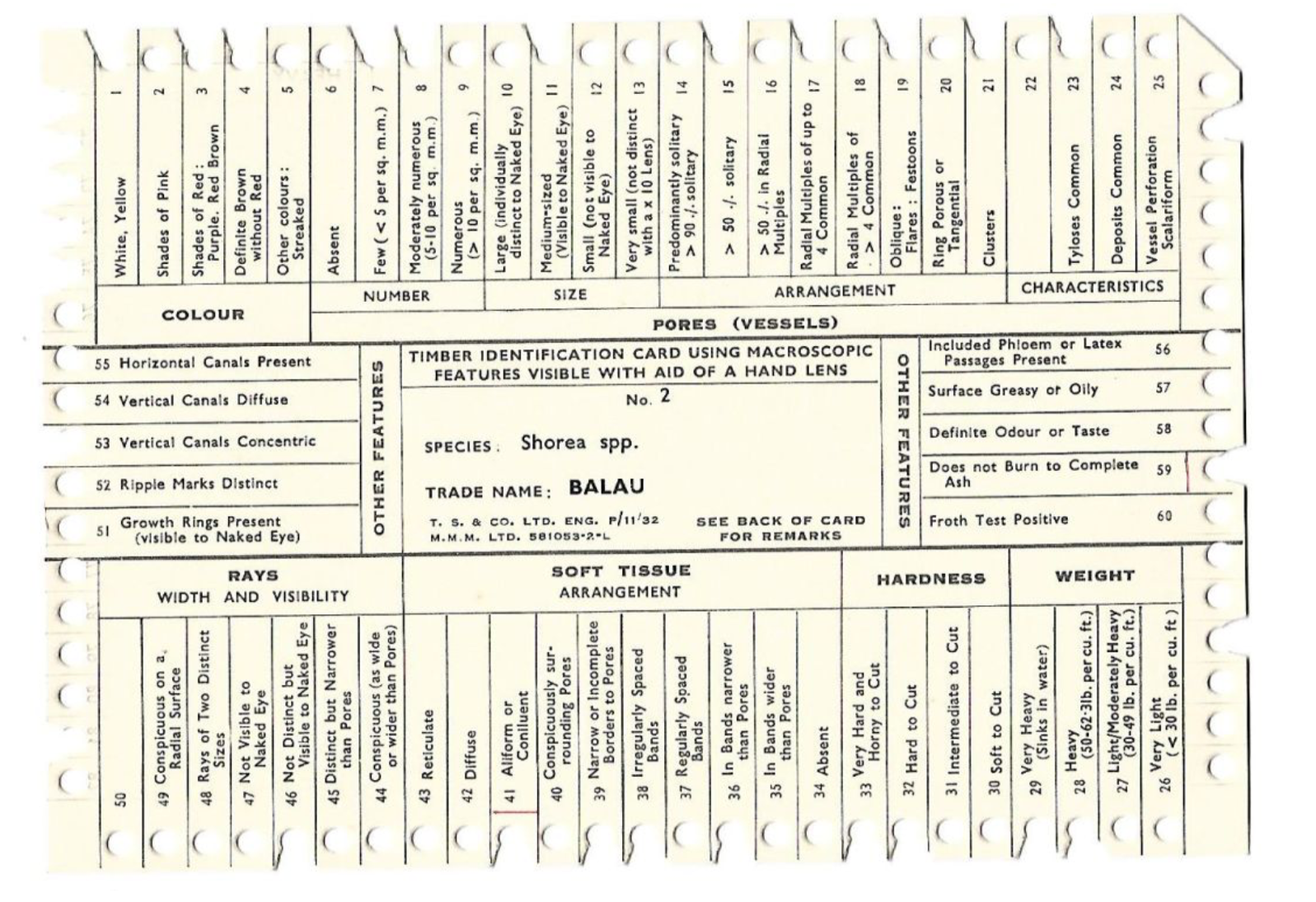
Card sorting key for balau (shorea spp.), a Malaysian dense hardwood that is suitable for many forms of heavy construction due to its durability.
--
Xylorix
Of all the methods used, it is obvious that expert recognition is still the best. But nowadays, experts are not easy to come by as it takes years to practise and develop the skill. In any case when a tentative identification is made, it is important to compare the unknown sample with authentic wood samples and slides in a reference collection. References and published articles are also important before making the final identification.
Macroscopic method
This is by far, the most used method especially for hardwoods identification as the process is fast and requires fewer and cheaper equipment. Macroscopic examination is also often the first process in wood identification before proceeding to other identification methods. The examination includes the determination of the colour, odour, weight, and unusual features e.g. latex traces in jelutong (Dyera spp.) or defects of the wood e.g. included phloem in kempas (Koompassia malaccensis) or tualang (Koompasia excelsa) or some specific feature on the surface like “ripple marks” on the tangential surface of chengal (Neobalanocarpus heimii). However, other chemical tests might also be employed such as the froth test, fluorescent test and burning splint test to acquire further information. The physical examination and the chemical tests often reveal some clues to the identity of the wood but may not be sufficient to confirm the actual identity of the unknown wood.
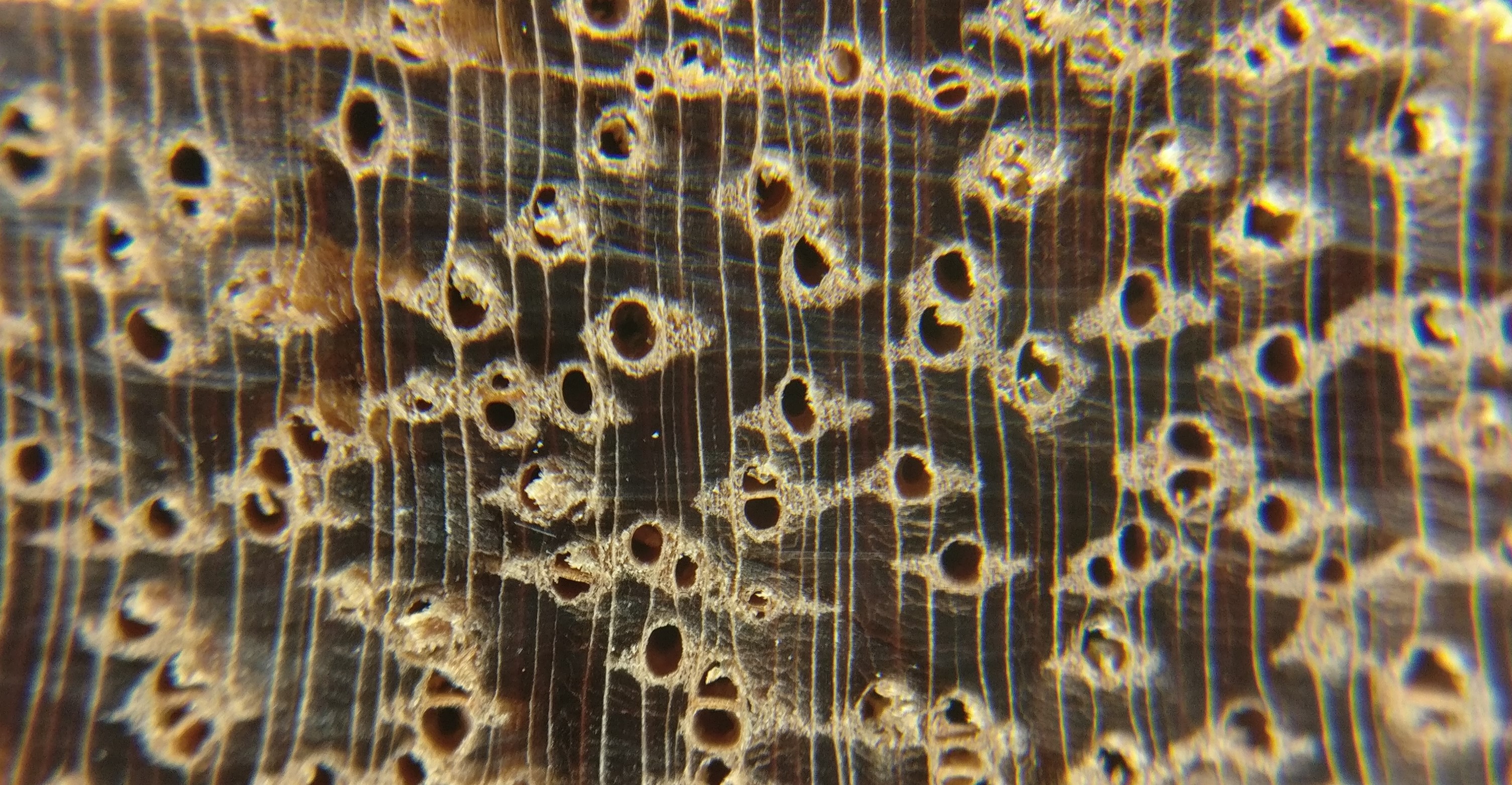
Macroscopic end-grain surface picture of a Kempas (Koompassia malaccensis) wood captured using the WIDK-24X01 macro lens kit.
--
Xylorix
Further examination on the wood structure is necessary; this is done by cutting the cross-section with a sharp knife (microtome or utility knife) or razor blade. The utility or microtome knife is best for large samples, but for small-sized samples, the razor blade works better. The smoothed cross-section is then examined with a magnifying hand lens. Wetting the surface also enhances the contrast and generally reveals more details. Based on the combination of a few diagnostic features, experienced wood anatomists can often make a tentative identification.
With the advancement of internet and technology, there are a few parties that are embarking on the use of AI through a process of deep learning where images of wood cross-sections are captured using mobile phones and used for AI model training. The process has been quite successful and it can be envisaged that more people will be using this method of wood identification in the future. The advantages of using this method include: fast result, low cost and can be done anywhere in the world as long as there is internet connection.
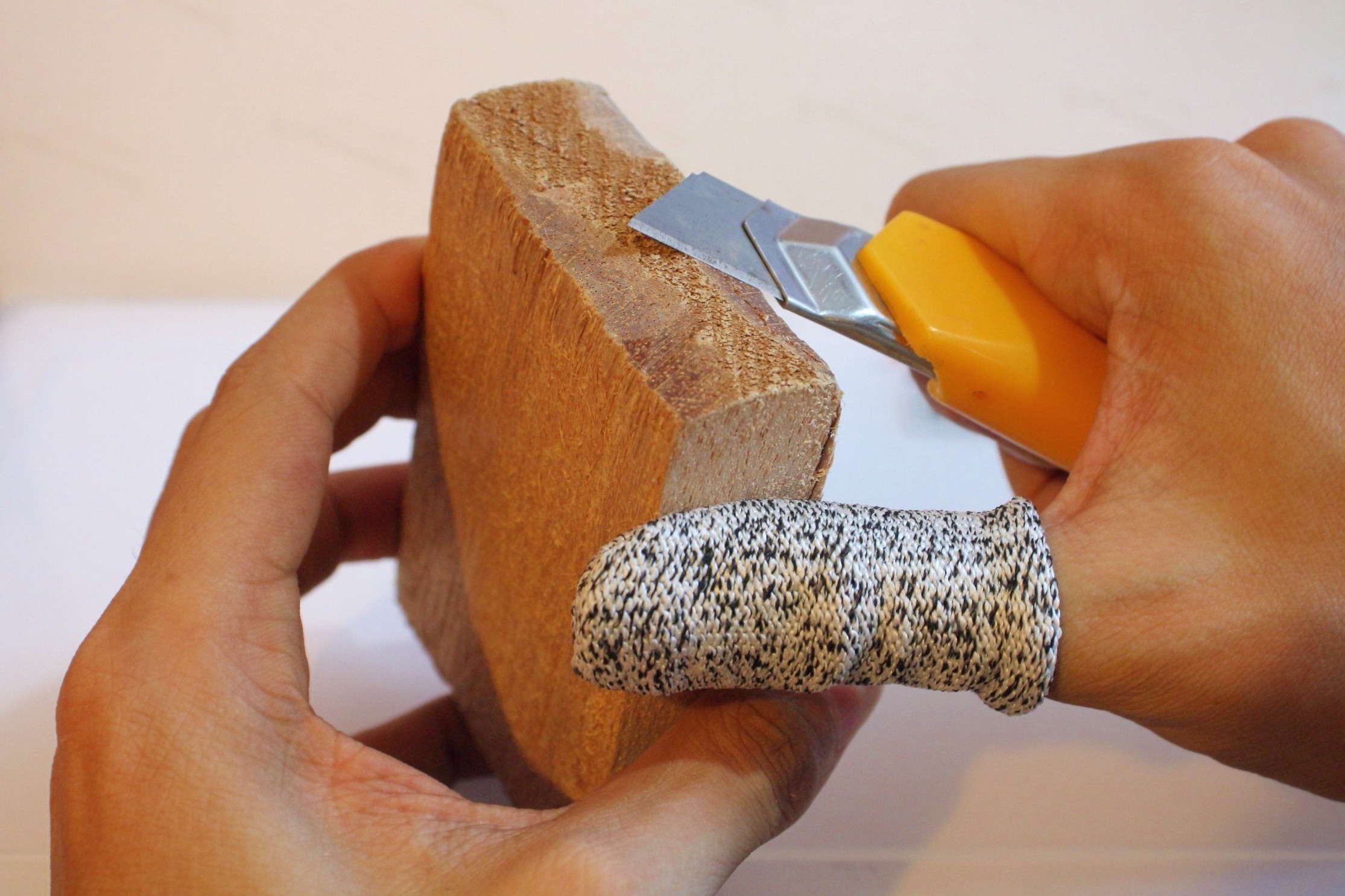
Cutting the wood end-grain surface with a razor knife to reveal clearer anatomical features for better identification.
--
Xylorix
Microscopic method
This is the process where the identification is carried out by the examination of the minute features of the wood, mainly on the tangential and radial surfaces, using the microscope. This is a very tedious process where microscopic slides have to be prepared in the laboratory. The process of slide preparation may take a day or two or even longer depending on how difficult it is to cut the wood into a very thin section of around 10 to 15 µm. By using the microscope, important features of the wood can be recognized and thereby determining the type of wood accurately. However, the person that carried out the examination is usually highly trained in the field of wood anatomy.
Over the years, many xylariums have developed the “computer-assisted wood identification” software using features developed by IAWA (International Association of Wood Anatomists). However, the use of the software is mainly confined to the wood anatomists or experts as the process is highly technical.
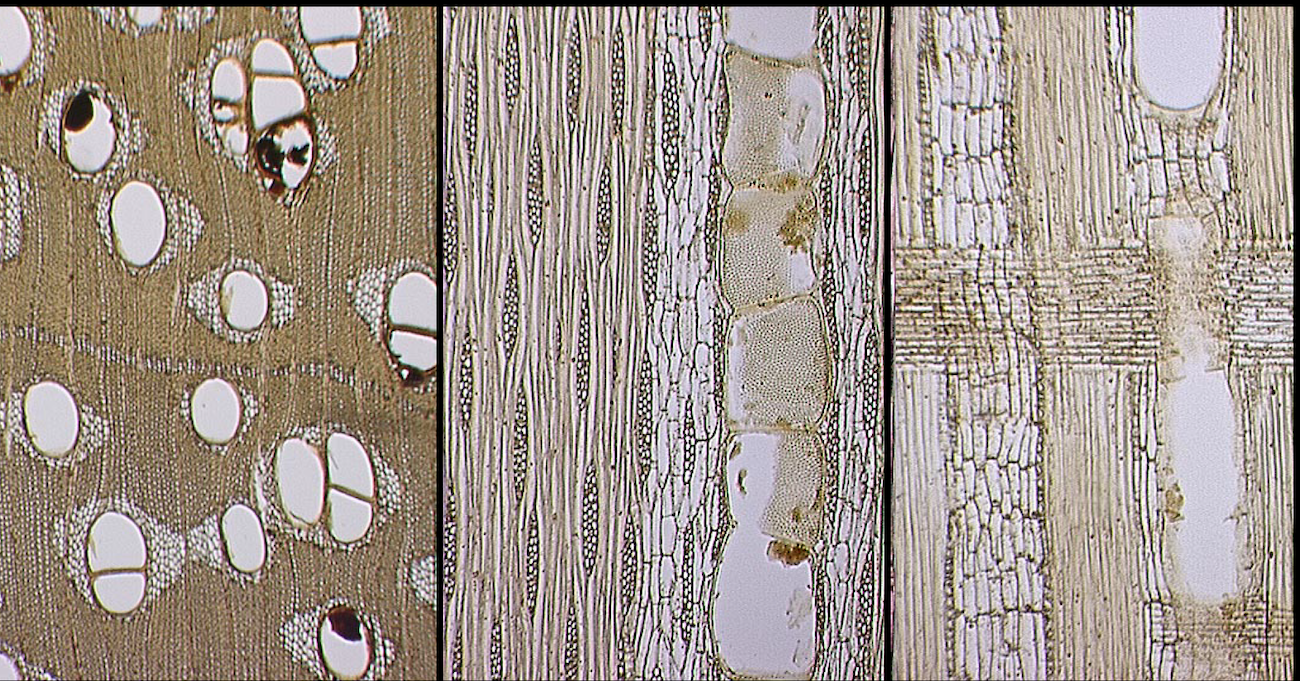
Microscopic images of merbau (intsia bijuga). From left to right: (a) cross-section, (b) tangential section and (c) radial section.
DNA method
This is a fairly new area of work where wood samples are collected, processed in the laboratory and after that, subject the prepared sample to a complicated analysis. The process can be rather accurate. However, before embarking on the process, there are a few things that need to take into consideration such as the setting up of a laboratory, collection of data, purchase of a very expensive equipment for analysis, well-trained scientist to handle the process, long duration for the results and finally very costly. At the moment, there are not many laboratories which can handle such a job.
-- Prepared By Xylorix Wood Experts Panel
Have any question or comment? Send us a message here
Thanks for reading the article! If you like it or wanting to see more of these articles, be sure to check out our Facebook and LinkedIn page where we keep our users updated when there's new article enter the series. 🥰